Sep 3, 2026
AI Content Platform: Human vs. Autonomous AI - 2026 Showdown
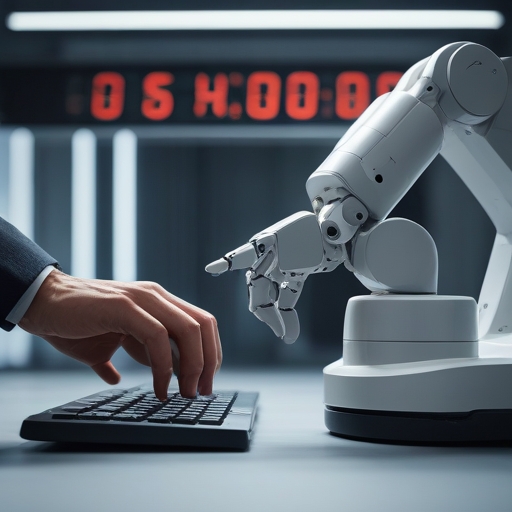
The landscape of content creation is rapidly evolving, with artificial intelligence leading the charge. As businesses strive to scale their content efforts while maintaining quality and SEO efficacy, a critical decision emerges: should you opt for an AI content platform with human control or leverage fully autonomous generators? This 2026 showdown delves deep into these two distinct approaches, examining their capabilities, limitations, and suitability for various content marketing objectives. Understanding the nuances between human-supervised AI and fully automated systems is paramount for content marketers, SEO professionals, and business owners aiming to produce Google-safe, high-performing content that resonates with their target audience and drives measurable results.
Defining the Landscape: Human-Controlled vs. Autonomous AI Content
The evolution of artificial intelligence in content creation has introduced a spectrum of solutions, each offering varying degrees of human involvement. In 2026, content marketers and SEO professionals navigate a landscape broadly categorized into human-controlled AI content platforms and fully autonomous AI content generators. Understanding the fundamental distinctions between these paradigms is crucial for selecting the right tools to achieve Google-safe and effective content strategies.
At one end of this spectrum are human-controlled AI content platforms, which represent a collaborative approach where AI functions as an enhancer rather than a replacement for human input. These platforms typically fall into two main categories, as defined by Fountain City Tech:
- AI-Assisted Tools: These are foundational AI functionalities that aid human content creators with specific tasks. Examples include grammar checkers, plagiarism detectors, outline generators, and headline suggestion tools. In this model, the human user remains the primary operator, actively guiding and executing the content creation process, with AI serving in a supportive, augmentative role. The AI enhances efficiency and quality but does not independently generate full pieces of content or manage workflows.
- AI Copilots: Moving a step further, AI copilots draft content based on human prompts. Popular platforms like Jasper and Copy.ai exemplify this approach. While these tools can generate substantial portions of text, outlines, or even complete articles, the human remains firmly "in the loop," responsible for reviewing, editing, fact-checking, and ultimately publishing the content. Source 1 highlights that with copilots, the human is still "driving every step," making editorial decisions and ensuring brand voice and accuracy. This significantly speeds up the drafting process compared to writing from scratch, but human oversight is integral to the entire workflow.
On the other end of the spectrum are fully autonomous AI content generators, often referred to as AI agents or agentic AI. These systems are designed to operate with minimal human intervention, taking on a much broader scope of content marketing tasks. MIT Sloan describes agentic AI as a "new breed of AI systems that are semi- or fully autonomous and thus able to perceive, reason, and act on their own," distinguishing them from traditional chatbots that merely field questions. The "agentic AI age is already here," according to Sinan Aral, a professor at MIT Sloan, with agents performing various tasks at scale Source 2.
A truly autonomous content marketing system, as outlined by Fountain City Tech, is capable of handling the entire content pipeline end-to-end. This comprehensive pipeline typically includes:
- Researching a topic
- Writing the content
- Optimizing for search and AI search engines
- Publishing to a Content Management System (CMS)
- Distributing to social channels
- Analyzing performance
Crucially, while autonomous, these systems still require human input for strategy setting and final output approval; they are not "zero intervention" but perform the bulk of the work between these human checkpoints without someone actively sitting at a keyboard Source 1. The shift towards such systems began notably in late 2024, with "AI agents" being positioned as the "next big advancement in AI technology" Source 3.
The core operational difference lies in the level of human control and decision-making. In human-controlled platforms, the user initiates specific tasks, provides detailed prompts, and meticulously reviews every output. The AI acts as a sophisticated assistant. Conversely, autonomous AI agents are designed to initiate work, make independent decisions based on predefined goals, and execute multi-step processes across various integrated software systems with minimal human oversight Source 2. They learn and adapt to achieve objectives, moving beyond simple content generation to full campaign execution. Workativ highlights that autonomous AI agents can "brainstorm ideas, gain deep insights, and generate content at scale," showcasing their comprehensive capabilities Source 4. However, this increased autonomy also introduces greater risks if human constraints are lacking, a concern emphasized by researchers arguing against the development of fully autonomous AI agents Source 3.
The distinction can be summarized as:
| Feature | Human-Controlled AI Platforms | Fully Autonomous AI Generators |
|---|---|---|
| Human Intervention | High (active driving, review, edit) | Minimal (strategy setting, final approval) |
| Task Scope | Specific content creation steps | End-to-end content pipeline management |
| Decision-Making | Human-led, AI assists | AI-led, human sets strategy/approves |
| Operational Model | AI-assisted tools, AI copilots | AI agents, agentic AI |
| Primary Goal | Enhance human efficiency & quality | Execute full content workflows independently |
This foundational understanding sets the stage for a deeper comparison of their impact on content quality, SEO performance, scalability, and overall workflow.

Content Quality, Accuracy, and E-E-A-T: A Critical Comparison
The distinction between human-controlled AI content platforms and fully autonomous AI generators fundamentally impacts content quality, originality, factual accuracy, and alignment with critical SEO principles like Google's E-E-A-T (Experience, Expertise, Authoritativeness, Trustworthiness). Understanding these differences is crucial for content marketers and SEO professionals seeking Google-safe and effective solutions in 2026.
Content Quality and Originality
Human-controlled AI platforms, often referred to as AI-assisted tools or AI copilots, operate on a paradigm where the human remains the primary driver. These systems, like Jasper or Copy.ai, excel at drafting content based on human prompts, but the user is expected to review, edit, and publish the final output Source 1. This human-in-the-loop approach allows for a superior level of content quality and originality. Humans can inject nuanced brand voice, subjective insights, complex storytelling, and unique perspectives that an AI, by itself, might struggle to generate. The editorial review ensures that the content stands out, resonates with the target audience, and avoids sounding generic or repetitive, a common pitfall of purely automated generation. This collaborative model harnesses AI's speed for initial drafts while preserving the creative depth and unique value only human intelligence can provide.
Conversely, fully autonomous AI agents are designed to perceive, reason, and act on their own, completing tasks with minimal human supervision Source 2. While this promises unparalleled scalability, it introduces significant challenges regarding content quality and originality. These systems, which aim to handle the entire content pipeline end-to-end Source 1, may produce content that relies heavily on patterns learned from vast training datasets. Without consistent human oversight, there's an increased risk of generating outputs that lack genuine creativity, sound derivative, or even unintentionally reproduce existing content structures, diminishing their perceived originality and distinctiveness.
Accuracy, Fact-Checking, and Bias Handling
Factual accuracy and unbiased information are paramount for building trust and authority online. In human-controlled AI workflows, the human editor serves as the essential gatekeeper for verification. Marketers and SEO specialists are directly involved in cross-referencing information, fact-checking claims, and correcting any inaccuracies or biases that the AI model might introduce. This hands-on approach provides a critical layer of quality control, ensuring that published content is reliable and truthful, thereby mitigating the risks of spreading misinformation.
The challenge is significantly amplified with fully autonomous AI agents. As stated by Source 3,
Scalability, Efficiency, and Cost-Benefit Analysis
Navigating the landscape of AI content solutions in 2026 requires a close examination of their operational characteristics, particularly concerning scalability, efficiency, and the overarching cost-benefit analysis. When comparing human-controlled AI content platforms with fully autonomous AI generators, distinct advantages and challenges emerge in terms of content volume, generation speed, and resource utilization.
Content Volume and Generation Speed
Human-controlled AI platforms, often characterized as AI-assisted tools or AI copilots, significantly accelerate content creation compared to purely manual processes. Tools like Jasper or Copy.ai (mentioned in Source 1) excel at drafting content based on human prompts, outlining ideas, and offering headline suggestions. While they enhance individual productivity, the content volume remains directly tied to human input, as "the human is still driving every step" Source 1. Therefore, scaling output linearly depends on the number of human operators and their prompt engineering efficiency.
In stark contrast, fully autonomous AI agents are engineered for end-to-end content pipeline management with "minimal human intervention" Source 1. These systems can initiate work independently, handling tasks from topic research and content generation to optimization, publishing, and distribution Source 1. This capability translates into potentially massive content volume and unprecedented generation speed, allowing businesses to "scale their operations manifold" Source 4. Once configured, these agentic AI systems can continuously produce and disseminate content without requiring constant human prompts for each piece, owing to their ability to "perceive, reason, and act on their own" Source 2.
Resource Requirements
For human-controlled AI platforms, primary resource allocation includes the subscription costs of the AI tool itself and, more significantly, the ongoing labor costs of content creators, editors, and SEO specialists. Although the AI speeds up the drafting process, human time is still extensively required for prompting, reviewing, editing, fact-checking, and final publishing. The human remains "the operator" Source 1 responsible for ensuring quality and strategic alignment.
Fully autonomous AI agents, conversely, demand a more substantial initial investment in sophisticated platforms and their integration into existing technology stacks. These systems often require robust infrastructure to support their independent task completion and integration with other software systems Source 2. While the direct human time per content piece is dramatically reduced post-setup, human resources shift towards strategic oversight, system monitoring, performance analysis, and defining the overall content strategy. The objective is to free human teams from day-to-day content generation, enabling them to focus on higher-level tasks.
Cost-Benefit Analysis
Human-Controlled AI Platforms:
- Costs: Involve recurring subscription fees for AI writing tools, alongside the salaries and operational expenses for human content teams. Initial setup costs are typically lower.
- Benefits/ROI: The primary return on investment comes from increased human efficiency, leading to higher content output per creator, faster time-to-market, and improved consistency. This can translate into enhanced SEO performance and better engagement rates without a proportional increase in human headcount dedicated solely to writing.
Fully Autonomous AI Generators:
- Costs: Feature a higher upfront investment for advanced agent platforms, integration expenses, and ongoing operational costs for system maintenance and sophisticated data analytics. Though still requiring humans to "set strategy and approve output" Source 1, the shift in human roles implies a different cost structure.
- Benefits/ROI: The long-term ROI is potentially transformative, with Nvidia CEO Jensen Huang predicting a "multi-trillion-dollar opportunity" Source 2 in enterprise AI agents. By automating the entire content lifecycle, businesses can achieve unparalleled scalability, drastically reduce the per-piece content production cost over time, and free human teams to focus on complex, strategic initiatives that require genuine human creativity and discernment.
Efficiency Gains vs. Potential Overheads
Human-controlled AI offers significant efficiency gains in content drafting, brainstorming, and basic optimization, allowing creators to produce more polished content faster. However, the inherent overhead lies in the constant need for human input, review, and approval for each piece, which can create bottlenecks and limit overall content velocity if human resources are constrained. The "human is still driving every step" Source 1 means this oversight is an unavoidable, continuous overhead.
Fully autonomous AI agents promise immense efficiency gains by automating the entire content pipeline, from research to distribution. This empowers human teams to shift focus from repetitive production tasks to high-impact strategic planning, brand development, and crisis management. The system effectively "does the work between those checkpoints" Source 1 without direct human keyboard interaction. However, this increased autonomy introduces new overheads related to risk management. As outlined in Source 3, "risks to people increase with the autonomy of a system." These include the potential for generating inaccurate, biased, or ethically questionable content at scale if not rigorously monitored and strategically guided Source 3, Source 4. While human intervention is minimal, robust oversight is critical to mitigate these severe risks, which could otherwise lead to significant reputational damage or SEO penalties. Therefore, while direct content creation overheads decrease, the strategic oversight and risk mitigation overheads become paramount.
Workflow, Team Impact, and Optimal Use Cases
Integrating AI into content workflows fundamentally reshapes team dynamics and operational strategies. The choice between a human-controlled AI content platform and a fully autonomous AI agent profoundly influences how content teams function and where their efforts are best directed.
Human-Controlled AI: Enhancing Existing Workflows
Human-controlled AI platforms, often referred to as "AI copilots" or "AI-assisted tools," are designed to augment rather than replace human creators Source 1. These systems integrate smoothly into existing editorial pipelines, acting as powerful assistants for content marketers and SEO professionals.
- Workflow Integration: For teams using human-controlled AI, the workflow typically involves humans setting the strategy, providing detailed prompts, and then extensively reviewing, editing, and publishing the AI-generated drafts. Tools like Jasper and Copy.ai fall into this category, where the AI drafts content, but "the human is still driving every step" Source 1. This means familiar steps like keyword research, outlining, drafting, editing, fact-checking, and optimization remain, but are significantly accelerated.
- Team Impact: The impact on content teams is generally positive, focusing on upskilling and efficiency. Human writers are freed from the most tedious or repetitive aspects of content generation, allowing them to dedicate more time to strategic thinking, injecting unique insights, ensuring brand voice consistency, and performing crucial fact-checking and ethical oversight. This collaborative model fosters a symbiosis where AI handles the heavy lifting of drafting, while human expertise provides the critical layers of nuance, creativity, and accuracy. It allows teams to scale content production without necessarily scaling the human workforce proportionally, by making each human more productive.
Fully Autonomous AI Agents: Reimagining the Pipeline
In contrast, fully autonomous AI agents are engineered to handle the content marketing pipeline end-to-end with "minimal human intervention" Source 1. These systems perceive, reason, and act on their own, often integrating with other software to complete tasks independently or with minimal human supervision Source 2.
- Workflow Integration: Implementing fully autonomous AI requires a more significant re-engineering of the content workflow. The system itself might initiate topic research, generate content, optimize it for search engines, publish to a CMS, and even distribute to social channels Source 1. Human involvement shifts from active creation and editing to setting high-level strategies, approving outputs, and monitoring performance. This hands-off approach necessitates robust automation infrastructure and careful pre-configuration.
- Team Impact: The team impact for fully autonomous systems is transformational. Roles might evolve from direct content creation to managing and supervising AI agents, refining their parameters, and performing strategic oversight. While potentially reducing the immediate need for large content writing teams, it introduces a demand for specialized AI strategists, prompt engineers, and ethical reviewers who can ensure the AI aligns with business goals and societal values. It's important to note that even with autonomy, "not zero intervention; you still set strategy and approve output" Source 1. However, experts like Margaret Mitchell argue that "risks to people increase with the autonomy of a system" Source 3, emphasizing the continued need for human vigilance.
Optimal Use Cases: Matching AI to Content Needs
The suitability of each approach largely depends on the specific content type, desired quality, and business objectives.
Best Use Cases for Human-Controlled AI:
- Thought Leadership & Expert Content: Articles requiring deep subject matter expertise, unique perspectives, and strong E-E-A-T (Experience, Expertise, Authoritativeness, Trustworthiness) where human input is indispensable for credibility.
- Creative & Brand-Centric Copy: Marketing materials, advertisements, and website copy where nuanced brand voice, emotional resonance, and persuasive storytelling are critical.
- Complex Research-Based Articles: Content that needs thorough fact-checking, synthesis of diverse sources, and potentially original research, where human discernment prevents inaccuracies and bias.
- Long-form Guides & E-books: Comprehensive content requiring logical structure, intricate details, and consistent flow, best guided by human editorial direction.
Best Use Cases for Fully Autonomous AI Agents:
- High-Volume, Standardized Content: Product descriptions, localized content across multiple regions, routine news updates (e.g., financial reports, sports scores), or frequently asked questions (FAQs). These tasks benefit from the speed and scalability offered by autonomous systems.
- Content Repurposing & Distribution: Automatically adapting existing content for different platforms (e.g., turning a blog post into social media snippets or email newsletters) and distributing it across various channels.
- Technical Documentation & Updates: Maintaining and updating large volumes of technical documents where data changes frequently but the format remains consistent.
- Basic Information Generation: Generating summaries or basic informational pieces where factual accuracy can be readily verified against structured data, and creativity is not a primary concern. The "agentic AI age is already here" Source 2, with agents deployed for various tasks, demonstrating their utility in specific, well-defined scenarios.
In summary, human-controlled AI empowers teams to produce higher quality, more nuanced content efficiently, retaining vital human oversight. Autonomous AI agents, while presenting potential risks if unchecked Source 3, offer unparalleled scalability for standardized, high-volume tasks, fundamentally reshaping the content creation pipeline by automating end-to-end processes. The optimal choice hinges on a careful assessment of desired content quality, required human oversight, and the specific strategic goals of the content operation.
Frequently Asked Questions About AI Agents
What is the best agentic AI platform for personal use?
The concept of an "agentic AI platform" primarily refers to advanced systems designed to perform multi-step tasks autonomously or semi-autonomously, often integrating with various software systems to complete complex workflows. As defined by MIT Sloan, this emerging class of AI systems can "perceive, reason, and act on their own." Such platforms are largely developed for enterprise and business applications, aiming to streamline operations and create "multi-trillion-dollar opportunity" for industries, as noted by Nvidia's CEO Jensen Huang regarding enterprise AI agents in 2025 (MIT Sloan).
For personal use, the term "agentic AI platform" might be a misnomer, as most individual users seek AI for simpler, more direct tasks rather than orchestrating complex, autonomous workflows. What individuals commonly use for personal productivity or creativity often falls into categories like "AI-assisted tools" or "AI copilots," as described by Fountain City Tech. AI-assisted tools help humans perform tasks (e.g., grammar checkers), while AI copilots draft content based on user prompts, requiring human review and editing. Platforms like Jasper or Copy.ai are examples of AI copilots that assist in content generation, offering a significant boost in efficiency for personal projects like blog writing, social media posts, or creative writing. While these tools leverage generative AI capabilities, they are not typically considered "fully autonomous agents" that operate without continuous human direction. Therefore, the "best" platform for personal use largely depends on the specific task, with a focus on ease of use, relevant features, and the level of human control desired for the specific outcome, rather than full autonomy.
What are 7 types of AI?
Artificial intelligence is a broad field with various classifications based on capabilities, functionality, and how they mimic human intelligence. While there isn't one universally agreed-upon list of exactly seven types, here's a common categorization that encompasses key distinctions in 2026:
- Reactive Machines: These are the most basic forms of AI, capable of perceiving their environment and reacting to it in a limited way. They have no memory or ability to learn from past experiences. An example is IBM's Deep Blue, which beat chess grandmaster Garry Kasparov.
- Limited Memory AI: This type of AI can use past experiences to make future decisions, but only for a short period. Self-driving cars use limited memory to observe other cars' speed and direction, while chatbots might reference recent conversation history. Generative AI models, including Large Language Models (LLMs) like those that swept people off their feet when ChatGPT launched (Workativ), fall into this category as they learn from vast datasets but don't retain long-term personal memories.
- Theory of Mind AI (Hypothetical): This advanced, currently theoretical AI would be able to understand human emotions, beliefs, desires, and thought processes, leading to more nuanced and empathetic interactions. It represents a significant leap towards human-like intelligence.
- Self-Aware AI (Hypothetical): The most advanced and entirely theoretical type of AI, possessing consciousness, self-awareness, and sentient capabilities. This would mirror human intelligence in its entirety.
- Artificial Narrow Intelligence (ANI) / Weak AI: This refers to AI systems designed and trained for a particular task, excelling in that specific domain but lacking broader cognitive abilities. Most AI developed to date, including facial recognition, voice assistants, and recommendation engines, falls under ANI.
- Artificial General Intelligence (AGI) / Strong AI: AGI would possess human-level cognitive abilities across a wide range of tasks, capable of understanding, learning, and applying knowledge to solve any problem a human can. This is still largely a future goal.
- Agentic AI / AI Agents: As discussed in our article, these are systems that, from late 2024 onwards, began to be deployed as autonomous goal-directed systems capable of perceiving, reasoning, and acting on their own (MIT Sloan, Workativ). They can initiate work, manage pipelines end-to-end, and complete tasks independently or with minimal human supervision, as outlined by Fountain City Tech.
What will be AI after 10 years?
Looking ahead to 2036, AI is expected to be profoundly more integrated and sophisticated than it is today. The focus will likely shift significantly towards more agentic and autonomous systems. MIT Sloan noted in 2025 that the "agentic AI age is already here," and by 2036, these systems will have matured considerably. We can anticipate AI agents to be far more capable of handling entire multi-step processes with minimal human intervention, not just in content marketing as discussed by Fountain City Tech, but across virtually every industry.
Key developments expected in the next decade include:
- Ubiquitous Agentic Integration: AI agents will be seamlessly embedded into business operations, from supply chain management and customer service to scientific research and personalized education. Workativ highlights the "immense potential" and "advancements in generative AI capabilities" that will drive this.
- Enhanced Reasoning and Adaptability: Future AI will likely exhibit more sophisticated reasoning capabilities, better understanding context, adapting to dynamic environments, and learning continuously from real-world interactions without constant reprogramming.
- Specialized and Swarm Intelligence: We may see an increase in highly specialized AI agents working collaboratively in "swarms" to tackle complex problems that no single AI could handle alone.
- Continued Ethical Debates and Regulation: As AI becomes more autonomous, the ethical implications, particularly regarding control, accountability, and the risks associated with full autonomy, will intensify. ArXiv highlights these risks, arguing that fully autonomous AI agents should not be developed. Regulations and ethical frameworks will evolve rapidly to govern their deployment and ensure human values are protected.
- Economic Transformation: The "multi-trillion-dollar opportunity" for enterprise AI agents, as projected by Nvidia's CEO in 2025 (MIT Sloan), suggests a massive economic restructuring driven by AI automation and innovation.
While AI will become more powerful and autonomous, human oversight, strategic direction, and ethical considerations will remain paramount, ensuring that these advanced systems augment rather than replace human ingenuity and control.
Which AI is most like human?
As of 2026, no artificial intelligence truly replicates the full spectrum of human cognition, consciousness, or emotional intelligence. All currently deployed AI systems fall under the category of Artificial Narrow Intelligence (ANI), meaning they excel at specific tasks but lack general human-like reasoning or sentience. However, certain types of AI simulate human-like qualities to varying degrees:
- Generative AI and Large Language Models (LLMs): These are arguably the most "human-like" in terms of output. LLMs, like the ones that powered the launch of ChatGPT and led to a surge in businesses using generative AI to create content at scale (Workativ), can produce incredibly fluent, coherent, and contextually relevant text, code, and other creative content. Their ability to engage in human-like conversation and generate original content can make interactions feel remarkably similar to communicating with a human, even though they are pattern-matching and predicting, not truly understanding or feeling.
- AI Agents: With the rise of agentic AI systems that are "semi- or fully autonomous and thus able to perceive, reason, and act on their own" (MIT Sloan), these AIs display a form of goal-directed behavior that can appear human-like in their initiative and problem-solving within defined parameters. They can manage complex workflows from research to distribution, as outlined by Fountain City Tech. This ability to autonomously carry out multi-step tasks makes them seem more proactive and purposeful, reflecting a functional similarity to human decision-making and task execution.
- Chatbots and Conversational AI: Designed specifically for human-computer interaction, these AIs excel at mimicking human conversation to provide information or complete simple tasks. While often limited in scope, their conversational fluency aims for a human-like user experience.
Despite these impressive capabilities, current AI lacks common sense reasoning, genuine emotions, subjective experiences, and the capacity for self-awareness that define human intelligence. The pursuit of Artificial General Intelligence (AGI), which would possess human-level cognitive abilities, remains a significant long-term goal for the field.