Aug 23, 2026
Low-Quality AI Content: What the NYT Crossword Clue 'SLOP' Means & How to Avoid It in 2026

When the New York Times crossword puzzle features a clue like "Low-quality A.I. content" and the answer is "SLOP," it immediately signals a widely recognized issue in the content landscape. This seemingly simple crossword entry, confirmed as recent as April 30, 2026, highlights a critical concern for content marketers, SEOs, and businesses relying on AI for creation: the prevalence of subpar, uninspired, and often inaccurate output. While the NYT crossword doesn't offer a detailed critique, its very inclusion validates that "low quality ai content" is a distinct and undesirable phenomenon. This article will delve into what constitutes "slop" in AI-generated text, explore its potential SEO repercussions, and, most importantly, provide actionable strategies to not only detect it but also to consistently produce high-quality, valuable content that stands out in 2026 and beyond.
Understanding the NYT Crossword's "Low-Quality AI Content" Clue
The New York Times crossword, a widely recognized cultural benchmark, recently featured a telling clue: "Low-quality A.I. content." The confirmed answer, last updated on April 30, 2026, is definitively "SLOP" Source 1. This succinct, yet potent, response offers a critical glimpse into the mainstream perception of AI-generated content when left unchecked. The term "slop" immediately conjures images of something hastily prepared, lacking care, and fundamentally unappealing or indigestible. For content marketers and SEO professionals, this isn't just a trivial crossword answer; it's a significant cultural reference point. It underscores the prevalent skepticism and the low bar often associated with unrefined AI output. The fact that such a clue appears in a major publication highlights a broader societal awareness and concern regarding the proliferation of poor-quality AI content, emphasizing the urgent need for human oversight and strategic integration to elevate AI's potential beyond mere "slop."
Defining 'Slop': The Hallmarks of Poor AI-Generated Text
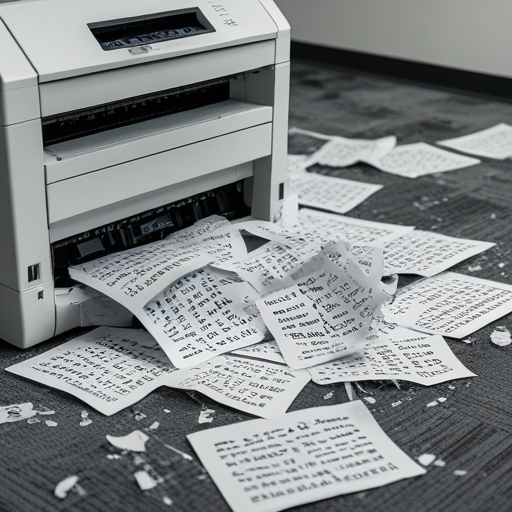
The New York Times, among others, has famously labeled low-quality AI content as "slop," a term that aptly describes its often undesirable characteristics. This "slop" typically manifests in several identifiable ways, significantly hindering content effectiveness and search engine optimization. A primary hallmark is repetition, where AI models rephrase the same points multiple times, leading to redundant and tedious prose. Closely related are unnatural phrasing and awkward sentence structures, which can make content difficult to read and alienate audiences.
Factual inaccuracies are another critical concern. While AI can process vast amounts of data, it can also confidently present incorrect information, damaging credibility. Content often suffers from a lack of depth, offering surface-level explanations without genuine insight or unique perspectives, failing to satisfy complex user queries. Lastly, poor keyword stuffing—over-optimizing with keywords in an unnatural manner—can still occur, despite advancements in AI. These issues collectively signal to search engines that the content provides a poor user experience, potentially leading to lower rankings and reduced organic traffic. The term "slop" itself has even appeared in recent crosswords referencing "low-quality A.I. content" in the NYT, highlighting its public recognition and usage NYT Crossword Answers.
From 'Slop' to Substance: Effective Detection and Editing Strategies
Identifying "slop" – the term notably used by the New York Times to describe low-quality A.I. content, even appearing in a crossword clue NYT Crossword Answers – is crucial for maintaining content integrity. Effective detection begins with a critical review, assessing for factual inaccuracies, logical inconsistencies, and repetitive phrasing that often plagues raw AI output. Implement a comprehensive checklist, scrutinizing:
- Accuracy and Fact-Checking: Verify all data, statistics, and claims against reliable sources. AI can confidently present incorrect information.
- Cohesion and Flow: Ensure smooth transitions between paragraphs and ideas, avoiding abrupt shifts in topic or tone.
- Originality: Utilize plagiarism checkers to confirm uniqueness and prevent accidental duplication, which can severely impact SEO.
Beyond detection, robust editing transforms 'slop' into substance. This involves refining sentence structures, enhancing vocabulary for nuance and clarity, and injecting a human voice to resonate with the target audience. Editors should prioritize adding unique insights, examples, or a distinct perspective that AI alone cannot generate. This meticulous approach ensures that AI-generated text is not just passable, but truly high-value and engaging.
Beyond Automation: Integrating Human Expertise for AI Content Quality
While AI platforms offer unprecedented speed and scale, the key to overcoming the challenges of low-quality AI content, often termed "slop" as highlighted even in crossword contexts, lies in robust human integration. Human editors are indispensable for refining AI-generated drafts, ensuring stylistic coherence, grammatical accuracy, and a distinct brand voice. They meticulously polish the output, correcting any inconsistencies or awkward phrasing that automation might miss.
Beyond mere editing, subject matter experts (SMEs) play a crucial role in validating factual accuracy and injecting nuanced insights that AI alone cannot replicate. Their expertise guarantees that complex topics are explained correctly and with appropriate depth, preventing superficial or misleading information. Content strategists then guide the entire process, crafting detailed prompts and strategic outlines for AI, aligning outputs with overall marketing goals, and ensuring the content resonates with the target audience.
This collaborative model leverages AI's efficiency for draft generation while reserving critical thinking, creativity, and quality assurance for human professionals. By establishing clear guidelines for AI and implementing rigorous human review stages, businesses can transform generic AI text into high-quality, engaging content that truly serves its purpose and stands out in 2026.
Future-Proofing Your Content: Advanced AI Tools and Quality Frameworks
Maintaining content excellence in 2026 requires more than just basic AI content generation; it necessitates leveraging sophisticated AI content platforms integrated with robust quality control frameworks. Modern AI platforms are evolving beyond simple text production, incorporating features like real-time SEO optimization, plagiarism checks, and tone analysis to help creators produce higher-caliber content.
To truly future-proof content quality, businesses are adopting hybrid approaches where AI handles initial drafts, and human editors refine for nuance, accuracy, and brand voice. Quality frameworks typically include detailed style guides, fact-checking protocols, and iterative review processes. This ensures that while AI enhances efficiency, human oversight remains paramount in elevating content from merely passable to genuinely engaging and authoritative.
Furthermore, adapting to AI's evolving capabilities and limitations is critical. Regularly updating AI models and fine-tuning prompts helps optimize output, mitigating issues like the "low-quality AI content" described even in contexts like the NYT crossword. Staying informed about AI advancements and potential pitfalls allows content strategists to proactively adjust workflows, ensuring their content consistently meets high standards and resonates with target audiences in a competitive digital landscape.